We hear the word “closure” everywhere — in true crime shows, in news coverage of trials, and in the well-meaning advice of friends after a loss. But where did this idea come from, and does the research actually support it? In this episode I trace the surprising history of closure, from the Gestalt psychologists of the 1920s, to Arie Kruglanski’s research on the “need for cognitive closure,” to its takeover by talk shows, the victims’ rights movement, and even the funeral industry in the 1990s. Along the way we look at what the science really shows: the craving for answers is real and measurable, and confirming the reality of a death does help people grieve. But sociologist Nancy Berns, family therapist Pauline Boss (who coined the term “ambiguous loss”), and a striking study comparing homicide survivors in death penalty and life-sentence states all point to the same conclusion — grief doesn’t have a finish line, and expecting one may do more harm than good.
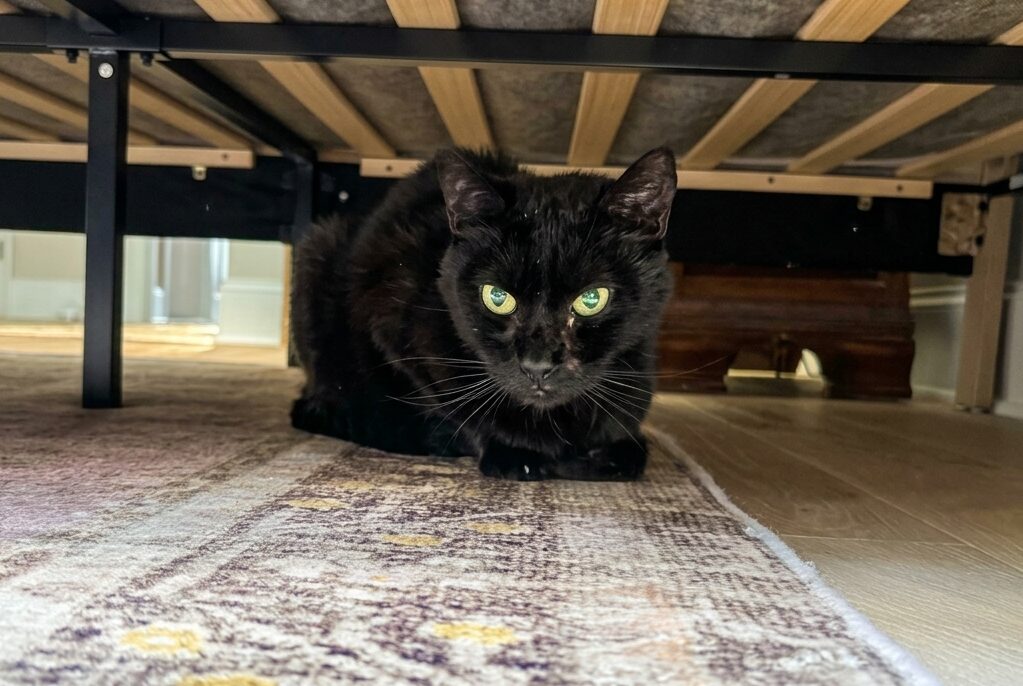
And then there’s my cat. After I brought one of my cats to be euthanized, several people asked whether I’d brought my other cat along “so she could have closure.” That question sent me into the research on animal grief: recent studies show that surviving dogs and cats really do change their behavior after a companion dies — seeking attention, eating less, even searching the house for their missing friend. But the one study that looked directly at whether viewing the body makes a difference found no effect at all. So is pet closure real science, or are we projecting a contested human concept onto our animals? Listen in and decide — and then ask yourself who that goodbye ritual is really for.
References & Resources for This Episode
- Armour, M. P., & Umbreit, M. S. (2012). Assessing the impact of the ultimate penal sanction on homicide survivors: A two state comparison. Marquette Law Review, 96(1), 1–131.
- Beike, D. R., & Wirth-Beaumont, E. T. (2005). Psychological closure as a memory phenomenon. Memory, 13(6), 574–593.
- Beike, D. R., Adams, L. P., & Wirth-Beaumont, E. T. (2010). Closure of autobiographical memories moderates their directive effect on behaviour. Memory, 18(1), 40–48.
- Berns, N. (2011). Closure: The rush to end grief and what it costs us. Temple University Press.
- Berns, N. (2011). Chasing “closure”. Contexts, 10(4), 48–53.
- Berns, N. (2012). Why people hate “closure”. Psychology Today (Freedom to Grieve blog).
- Boss, P. (1999). Ambiguous loss: Learning to live with unresolved grief. Harvard University Press.
- Boss, P. (2002). Ambiguous loss in families of the missing. The Lancet, 360, s39–s40.
- Boss, P., & Carnes, D. (2012). The myth of closure (PDF). Family Process, 51(4), 456–469.
- Boss, P. (2021). The myth of closure: Ambiguous loss in a time of pandemic. W. W. Norton.
- Chapple, A., & Ziebland, S. (2010). Viewing the body after bereavement due to a traumatic death: Qualitative study in the UK. BMJ, 340, c2032.
- Greene, B., & Vonk, J. (2024). Is companion animal loss cat-astrophic? Responses of domestic cats to the loss of another companion animal. Applied Animal Behaviour Science, 277, 106355.
- Klass, D., Silverman, P. R., & Nickman, S. L. (Eds.). (1996). Continuing bonds: New understandings of grief. Routledge.
- Lilienfeld, S. O., Sauvigné, K. C., Lynn, S. J., Cautin, R. L., Latzman, R. D., & Waldman, I. D. (2015). Fifty psychological and psychiatric terms to avoid: A list of inaccurate, misleading, misused, ambiguous, and logically confused words and phrases. Frontiers in Psychology, 6, 1100.
- Omerov, P., Toivonen, K., Nyberg, T., Steineck, G., & Nyberg, U. (2014). Viewing the body after bereavement due to suicide: A population-based survey in Sweden. PLOS ONE, 9(7), e101799.
- Roets, A., & Van Hiel, A. (2011). Item selection and validation of a brief, 15-item version of the Need for Closure Scale (PDF). Personality and Individual Differences, 50, 90–94.
- Uccheddu, S., Ronconi, L., Albertini, M., Coren, S., Da Graça Pereira, G., De Cataldo, L., Haverbeke, A., Mills, D. S., Pierantoni, L., Riemer, S., Testoni, I., & Pirrone, F. (2022). Domestic dogs (Canis familiaris) grieve over the loss of a conspecific. Scientific Reports, 12, 1920.
- Walker, J. K., Waran, N. K., & Phillips, C. J. C. (2016). Owners’ perceptions of their animal’s behavioural response to the loss of an animal companion. Animals, 6(11), 68.
- Webster, D. M., & Kruglanski, A. W. (1994). Individual differences in need for cognitive closure. Journal of Personality and Social Psychology, 67(6), 1049–1062. (Scale and background at kruglanskiarie.com.)



Leave a Reply